Finding a genuine research gap used to mean weeks of reading stacks of papers, cross-referencing citation chains, and hoping you'd eventually stumble across something nobody had properly studied yet. That process is brutal — especially if you're a master's student or early-career researcher who doesn't have a decade of domain expertise to draw from.
AnswerThis (answerthis.io) changes the math on that. It's a browser-based AI research workspace that reads through published literature for you and maps out where the open questions, understudied intersections, and conflicting findings are sitting. No downloads, no plugins. You type a question, and it returns a structured research landscape with gap analysis baked in.
The 3-Step Workflow
- Create a free account at answerthis.io. No credit card. Just an email or Google sign-in. You land on a clean workspace dashboard within seconds.
- Enter your research question or topic. Be specific. Instead of "machine learning in healthcare," try something like "machine learning applications for early detection of diabetic retinopathy in low-resource settings." The tighter your prompt, the more useful the output. AnswerThis pulls from indexed academic databases and starts building a structured overview.
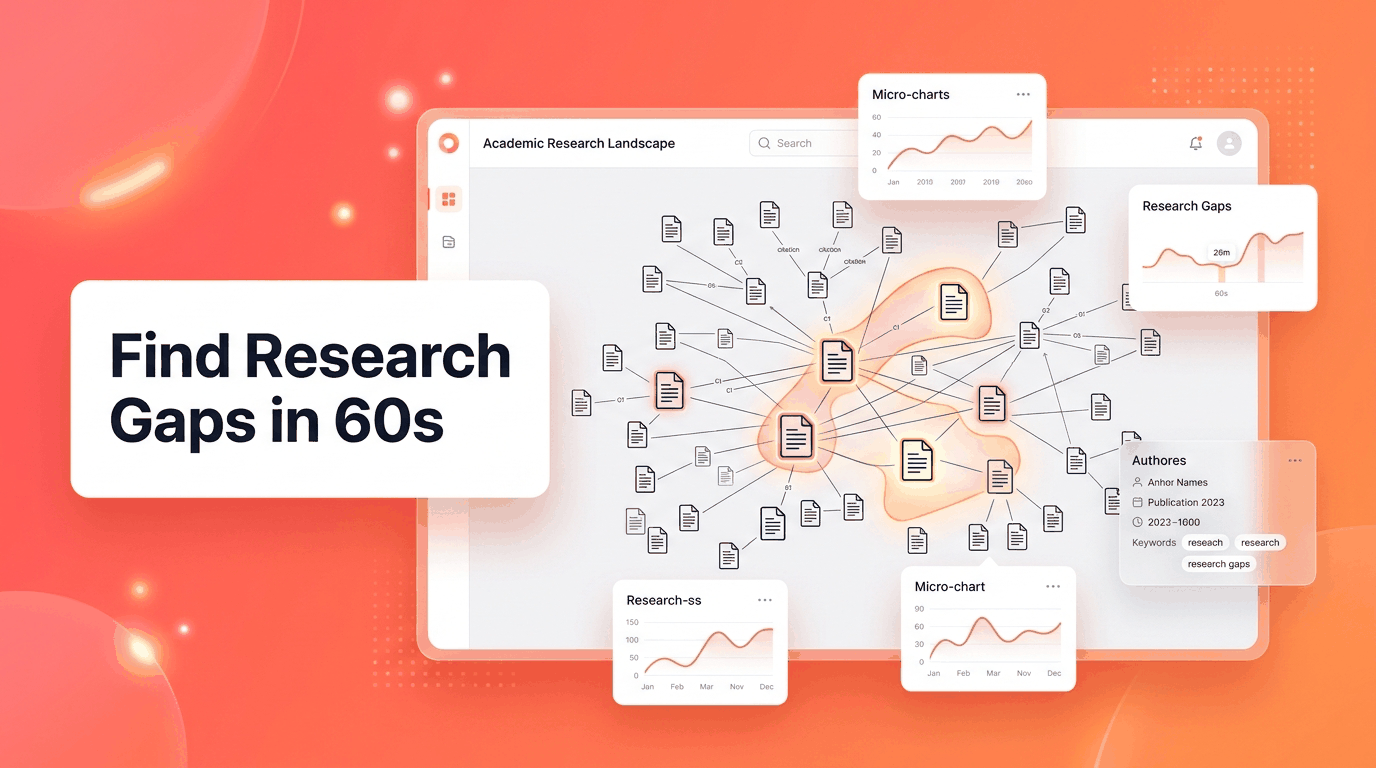
- Review the generated research landscape. AnswerThis organizes its output into a few sections: a literature overview, a gap map that flags understudied angles and conflicting findings, and suggested research directions you could pursue. Some of these suggestions are genuinely sharp — the kind of connections that would take you days to notice manually.
I've tested it with questions across computational linguistics, public health policy, and materials science. In each case, the gap map surfaced at least two or three angles I hadn't considered, plus a handful of papers I'd missed entirely. It's not magic — it's structured literature analysis done faster than any human could manage by hand.
Where It Falls Short
- Free tier has limits. You get a restricted number of queries per month on the free plan. If you're doing heavy literature review work for a thesis, you'll hit the ceiling fast and need to decide whether the paid plan is worth it for your workflow.
- Ultra-niche sub-fields get thin coverage. If your research sits at a very narrow intersection — say, a specific polymer chemistry application in a particular geographic context — AnswerThis may not find enough indexed papers to build a meaningful gap map. It works best when there's a reasonable body of existing literature to analyze.
- It doesn't replace reading the papers. This is the big one. AnswerThis tells you where to look, not what the papers say. You still need to read the actual studies, verify the gaps exist, and understand the methodological context before you write anything into a proposal. Think of it as a compass, not a finished map.
For the 60 seconds it takes to run a query, though? AnswerThis is one of the better starting points I've found for early-stage research scoping. It won't write your literature review. But it'll tell you where the interesting white space is — and that's half the battle.